Know before you go
Where to stay on the Greek islands: rooms, studios and hotels
Most Greek island accommodation is a handful of rooms above a family's own house. That is a feature, and it explains almost everything about how booking works.
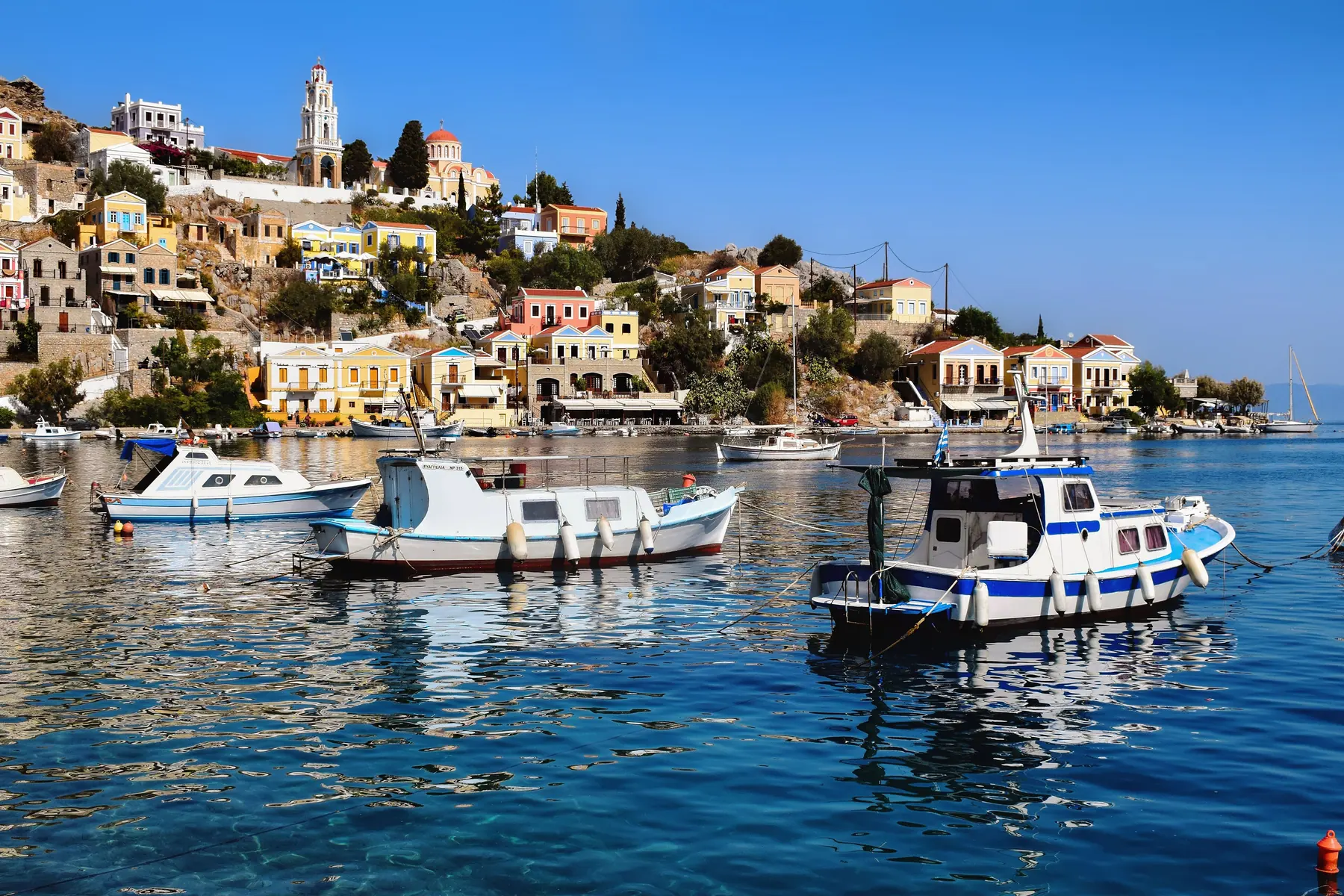
Outside the resort coasts of the largest islands, the standard offering is a small building of studios and apartments, run by the people who own it, with a total capacity in the low dozens. It tends to be clean, plain, generous and cheap by the standards of anywhere else in Europe with that view.
The consequences are practical. Supply is tiny, so August books out months ahead while June rarely does. Standards vary by family, not by star rating. And the difference between a good week and an awkward one is usually the location rather than the room.
The three positions
The port, which is convenient and awake late. The main town or chora, usually inland or uphill, which has the shops, the tavernas and the character. And a beach, which is what most people picture and which can mean being twenty minutes from anywhere to eat.
On a stop of one or two nights the port wins on logistics alone. On a longer stay the chora is almost always the better base, because it is the place the island actually lives in.
What the room usually includes
Air conditioning, a fridge and a balcony are close to standard, and so is a kettle-free kitchenette in anything called a studio. What is often missing is a lift, and buildings on these islands are built into slopes: a room on the upper floor of a village house can mean two flights of outside steps, which matters more with a suitcase than it does in a photograph.
Breakfast is usually not included and is rarely worth adding. A bakery and a coffee at a harbour table costs less and is the better start to the day.
One question is worth asking before booking anything on a small island: how far is it to somewhere that serves dinner. A beautiful room twenty-five minutes' walk from the nearest taverna, on an island with no taxi and no evening bus, turns every night into a decision.
When to book, and how far ahead
The season splits into three. August is the one constrained month: supply on a small island is a few dozen rooms in total, Greek families take their own holidays then, and both the rooms and the ferries fill months in advance. July and the second half of September are busy but tractable a few weeks out. May, June and October are the months when a room can be found on arrival, and when the price is roughly half.
Most of these places are not on the large booking platforms, or are on them with two photographs and no reviews. A phone call or an email to the owner is normal, gets a faster answer, and is how you find out that the studio with no listed sea view is the one above the bakery with the balcony over the harbour.
An example, on a small island
What the standard offering actually looks like: Apollon Village on Anafi is a family place of studios and apartments on the slope above Klissidi beach, in the low dozens of rooms, three to ten minutes above the sand. That is the shape of the thing on most of these islands — not a hotel with a reception and a pool, but a building belonging to a family, with a beach below it and one taverna.
The last night
One booking decision is worth making separately from the rest: where to sleep the night before leaving. Early flights, an early boat and a suitcase are a bad combination with a village on a hill and no taxi before eight. On the final night the port wins, even on an island where the chora is the better base for the week, and it is worth breaking a stay in two to get it.