Tinos is one of the best kept secrets in the Cyclades. Whilst Mykonos, Naxos, Paros & Santorini grab the major share of foreign tourists, Tinos is by far the most popular destination for Greek tourists who come to visit Tinos Town, location of the famous Neoclassical Church of the Panagia and the miraculous Icon of the Virgin Mary located therein. From the expansive main waterfront of Tinos town, lined on the one side by a myriad of cafes, tavernas and shops and on the other by yachts and excursion boats, two streets lead up to the church, in turn lined with shops and stalls selling all manner of souvenirs and devotional articles. But there is more to Tinos Town than the church. A sandy, town beach is about 500 metres away, and one can browse the local farmers’ market in Pallada or seek out a trinket or two at Tinos flea market. Tinos Town is noted for its cuisine, so “foodies” will be in their element with many tavernas and restaurants offering quite outstanding fare.
On a short island-hopping stop, Tinos Town is the place to stay, because it wastes none of the little time you have. A longer stay is better spent in the Porto area, a 15 minutes’ bus ride or a 10 minutes’ drive south east of Tinos Town. Porto’s coastline boasts three consecutive stretches of sandy beach commencing with Agios Sostis, then Skilandari and finally Porto beach itself. All offer the proverbial crystal clear waters, safe swimming and views across to Mykonos. Excellent accommodation, a mini-market and a handful of tavernas are the extent of development here, give or take a few beach loungers and umbrellas. Coastal walks in this region are superb with the pristine sand of Pachia Ammos about 55 minutes walk to the north east.
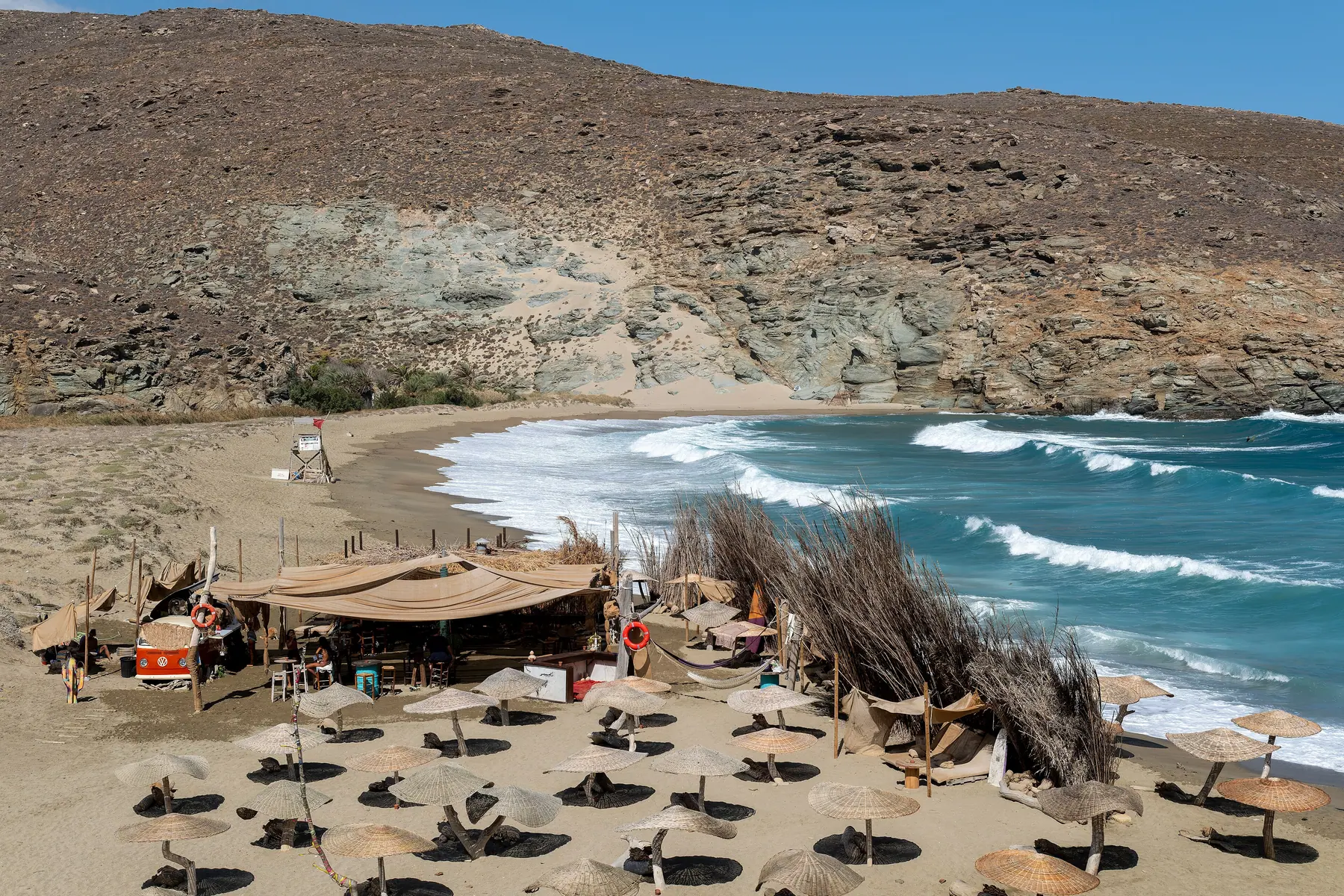
A car for all or part of a stay opens up at least half a dozen other beaches dotted around Tinos’ coastline as well as the villages of the interior. The latter are worth a special mention as they rank among some of the most attractive villages in the Cyclades. In particular, the beautiful village of Pyrgos with its shaded main square is top of most visitors list. Located right in the middle of Tinos’ marble-quarrying district, the village is home to local artisans renowned throughout Greece for their skill in sculpting marble. One can visit the numerous marble workshops and sculpture studios in the village as well as the magnificent new “Museum of Marble Crafts”. Another area of interest is the villages around Exobourgo “mountain”. Possibilities here include a visit to the fortified architecture, narrow alleyways and 3 springs of Dio Choria, experiencing views across the island to Mykonos, Naxos and on a clear day Santorini from Exobourgo village itself and not forgetting visits to the Jesuit Folklore museum and Ursuline Convent in Loutra. Armed with a map and good walking shoes, it is possible to visit the Tiniot villages of Exobourgo by using many of the old trails that still exist. One last characteristic that Tinos is noted for are the distinctive and ornate dovecots that dot the landscape.
Things to do
Tinos is thought to be the only island in Greece where you can take lessons in marble sculpting. These courses offer both beginner and professional alike the same level of individual assistance in an informal studio atmosphere. The same principles for beginner and expert alike are applied at the island’s scuba diving centre.
More conventional ways of passing ones holiday time can be had by joining the guided coach, walking or open top self-drive jeep tours of the island and taking to the sea to visit neighbouring Syros and Delos/Mykonos.
Getting there
Travel between Mykonos and Tinos is by ferry (30 mins.).
| Leg | By | Roughly |
|---|---|---|
| Mykonos → Tinos | ferry | 30 min |
Crossing times are the scheduled durations of the route, not a timetable. Sailings vary by season and operator.