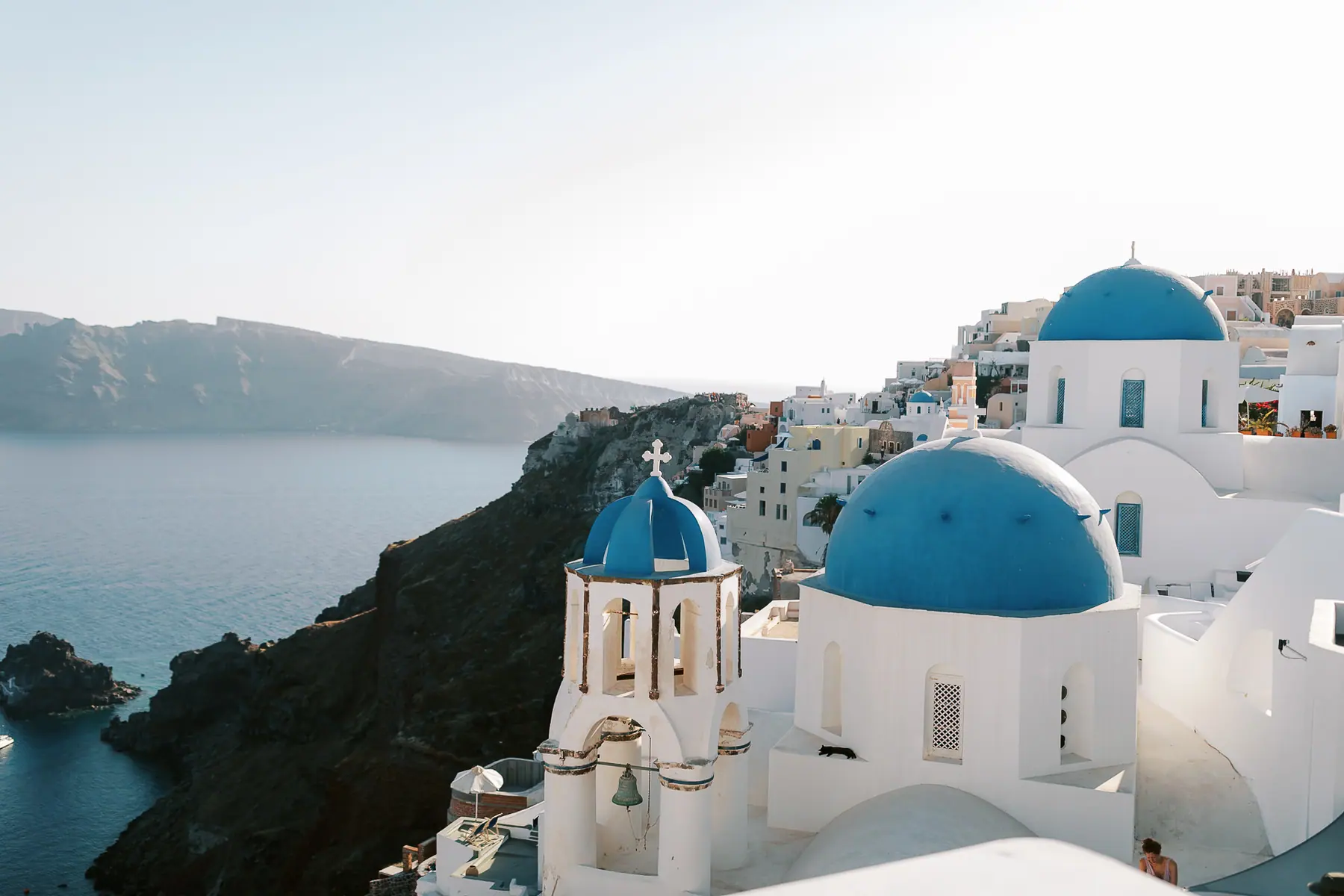
Also known as Thira, Santorini is an island of extremes. How else could you describe a place where the inhabitants have built towns on a cliff’s edge hundreds of feet above the sea, where the beaches are black and where smouldering volcanoes lay only a short boat ride away? Those attributes pull in a steady stream of cruise ships and holiday jets, and Santorini is among the busiest islands in the Aegean as a result. In spite of the crowds, Santorini remains an absolutely stunning island with its white villages clinging to the volcanic cliffs, views to die for and quite amazing sunsets.
The geological origins of the island are well documented. In 1450 BC this volcanic island erupted thus forming the crescent shaped caldera. Three areas sit along the caldera rim, and the views from each are equally spectacular.
Thira is the island’s capital and as such is the most busy and commercialised. That said, the domed churches, barrel-roofed cave houses, hotels, bars and restaurants that have been terraced into the lip of the caldera are captivating in their quite astounding locality. Away from the rim of the caldera, the town has several excellent museums, many trendy shops and an astounding choice of places to eat and drink, many staying open into the small hours. Without doubt, Thira is the best base to explore Santorini as a whole. An excellent bus network connects Thira with all the main towns, villages and tourist attractions including the black pebble beach areas of Perissa and Kamares as well as the amazing Minoan archaeological site at Akrotiri. Most of the organised excursions also emanate from Thira.
Imerovigli is only a couple of kilometres north of Thira, connected by a cliff-top path. In common with Thira, this area commands the same caldera views but is less busy. With its own restaurants, cafes and shops, Imerovigli is self sufficient in holiday facilities. The same spectacular footpath that skirts the caldera and connects Thira and Imerovigli then runs to the north of the island to Oia.
Oia, designated a traditional settlement, Oia’s white and pastel-coloured houses with red pebble walls cling to the cliff face along with the famous Skafta cave houses, blue-domed churches and ship-owners neo-classical mansions. Shops, cafes, bars and restaurants are plentiful. This combination makes Oia a fine and quieter alternative to Thira but being so far north does make it that more difficult to explore Santorini as a whole.
Santorini can be combined with Amorgos, Anafi, Antiparos, Athens, Crete, Folegandros, Koufonissia, Milos, Mykonos, Naxos, Paros, Sikinos & Tinos.
Things to do
A wide selection of coach and boat trips are offered including land based excursions that visit the excavations at Akrotiri, swimming at Perissa and a wine tasting experience at one of the wine making companies based on the island. Sea excursions include the islets of Nea Kameni and Palea Kameni where one can swim in the hot springs and the neighbouring island of Thirassia.
Scuba diving, mountain biking, horse riding, sea kayaking and a range of watersports can all be arranged locally.