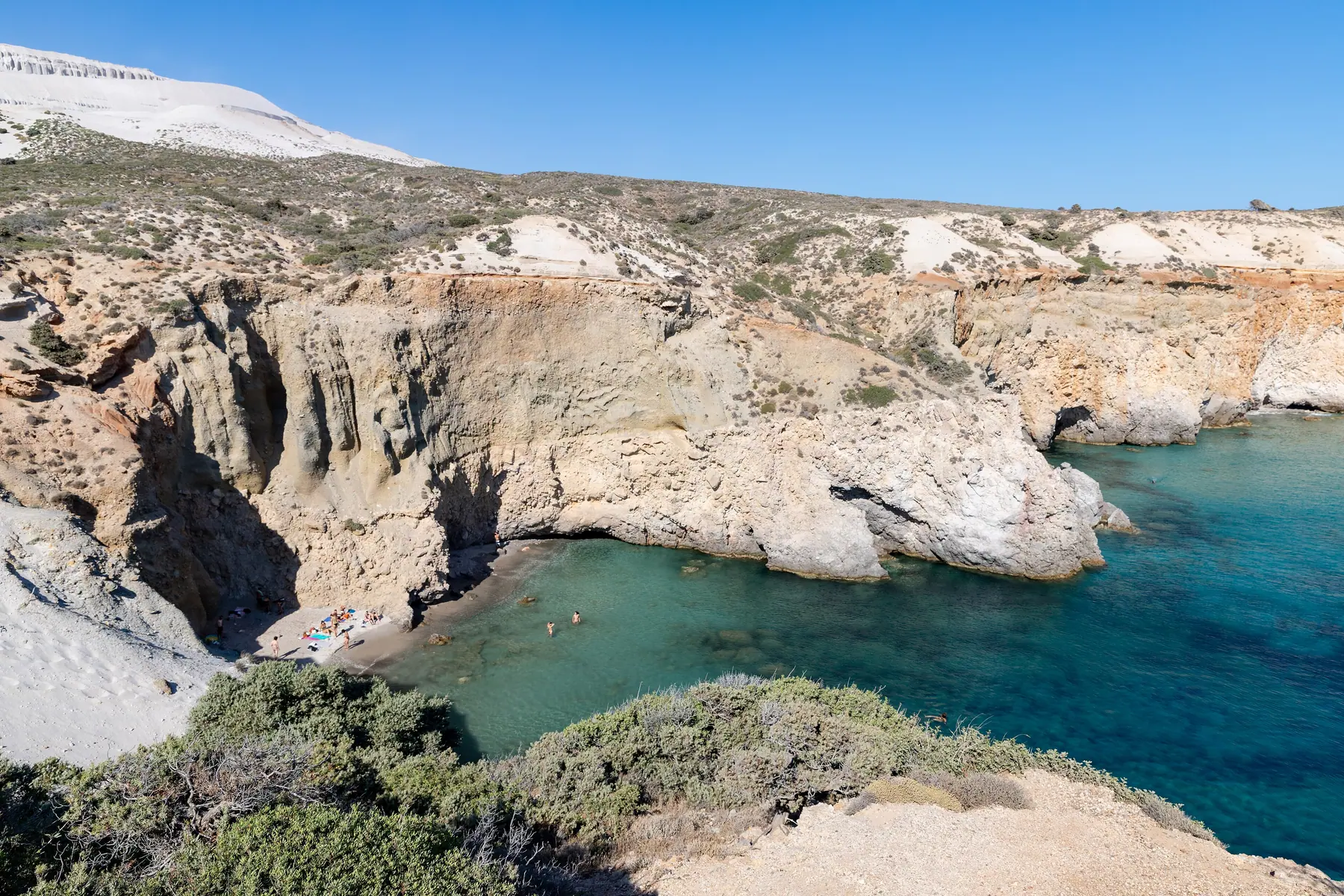
Known locally as the island of 100 beaches, this 161 square kilometres of multi-hued, volcanic rock certainly knows how to spoil committed beachcombers. Two weeks is enough to visit a different beach every day, many of them in astounding locations with dramatic rock formations including caves and arches as backdrop. Some of the more spectacular stretches of sand can only be accessed from the sea. The round-the-island boat trips reach them, and the ones worth taking build in time to swim rather than just passing by.
But Milos is more than just beaches and spectacular coastal scenery. The port of Adamas has become a favourite destination with the Athenian cognoscenti and it remains oddly unknown to foreign visitors. Two bays flank the meandering waterfront lined with cafes, tavernas and a myriad of shops. A pre-dinner stroll by the quayside reveals luxurious cruisers bobbing up and down on the gentle swell. It is easy to travel around the island. A comprehensive bus network connects Adamas with the main tourist beaches such as Paleochori and Provatas whilst also linking other communities in nearby, hilltop Plaka and coastal Pollonia which is further away in the north. A day in Plaka offers panoramic views, the possibility to visit the archaeological and folklore museums and to eat very well in a classy taverna. Pollonia’s quaint little harbour lies adjacent to a superb tree-fringed, sandy bay. A handful of local shops, excellent holiday accommodation and first class tavernas are the mainstay of this up and coming resort area.
One can visit the neighbouring island of Kimolos for the day from Pollonia as the local ferry takes only 30 minutes to make the short crossing.
Milos can be combined with Amorgos, Athens, Folegandros, Kimolos, Koufonissia, Mykonos, Naxos, Santorini, Serifos & Sifnos.
The island’s famous things are all somewhere else
Milos is volcanic, the south-westernmost of the Cyclades, and had an export business before almost anywhere in Europe had farming: obsidian from here was cut, traded and worked into blades as much as fifteen thousand years ago, and it travelled the whole eastern Mediterranean. The population today is a little over five thousand.
The sculpture the island is known for is not on it. The Venus de Milo was found here and is in the Louvre; the Poseidon of Melos is in the National Archaeological Museum in Athens, and the Asclepius is in the British Museum. What remains on Milos is the landscape that produced them, which is the better half of the deal: the catacombs, the ancient theatre above Klima, and the coloured volcanic rock that gives the coast its shape.
Things to do
The most popular trips without any doubt are the excursions by boat around the coastline of Milos. The more adventurous will try a full day sea kayaking (no experience necessary). Sea caves, natural arches and passages, rock gardens, huge cliffs, secluded coves, deserted beaches and small islets are all on the itinerary and still there will be time to swim, snorkel and picnic.
Getting there
Travel between the mainland and Milos is either by ferry (4 hrs) or flight (40 mins.).
| Leg | By | Roughly |
|---|---|---|
| London → Athens | flight | — |
| Athens (Piraeus) → Milos | ferry | 4 hrs |
| Athens → Milos | flight | 40 min |
Crossing times are the scheduled durations of the route, not a timetable. Sailings vary by season and operator.