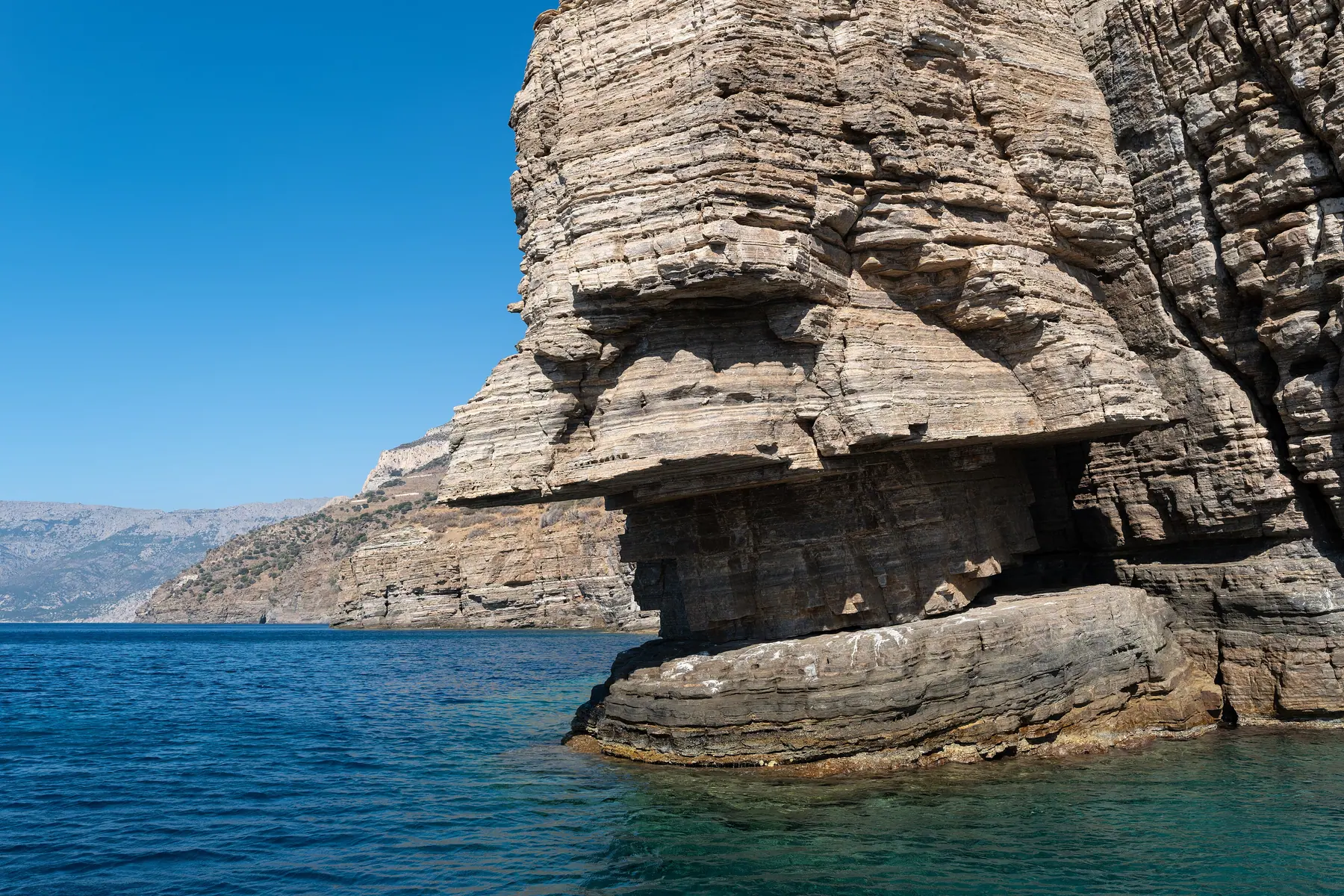
Blessed with superb beaches and breathtaking scenery, notably the pine covered hills and untamed ravines, Ikaria also possesses quaint, unspoilt villages and superior tourist accommodation. Situated between Samos in the east and Paros in the west, Ikaria is a long and narrow island 21 miles in length and between 3 & 5 miles wide.
The coastline is tortuous, quite often dropping dramatically straight to the sea with most of the small villages clinging precariously to their footholds on the sheer slopes. The south-east around Faros is the exception, where the ground flattens enough for ordinary walking and ordinary parking.
The village of Armenistis with its magnificent, sandy beaches and sleepy, relaxed atmosphere lies beneath fine wooded scenery on the north west coast of Ikaria. A small, picturesque harbour, surrounded by a handful of tavernas and cafes is as exciting as it gets in Armenistis. Car hire is a positive consideration during your stay on Ikaria. There are a number of lovely villages as well as the scenic splendour of the interior of the island worth exploring.
Things to do
Walking to the inland Rahes hamlets from Armenistis has become increasingly popular. Locally printed guide maps now offer visitors the opportunity to explore this beautiful area on foot. Longer hikes are also possible including the descent of Halaris canyon and crossing the island to Manganitis. A lazier way to see the island is to take one of the organized bus excursions, one of which includes dinner in the Rahes hamlet of Christos.
Getting there
Travel between Samos and Ikaria is by ferry (2 hrs. 5 mins.).
| Leg | By | Roughly |
|---|---|---|
| Samos → Ikaria | ferry | 2 hrs 5 min |
Crossing times are the scheduled durations of the route, not a timetable. Sailings vary by season and operator.