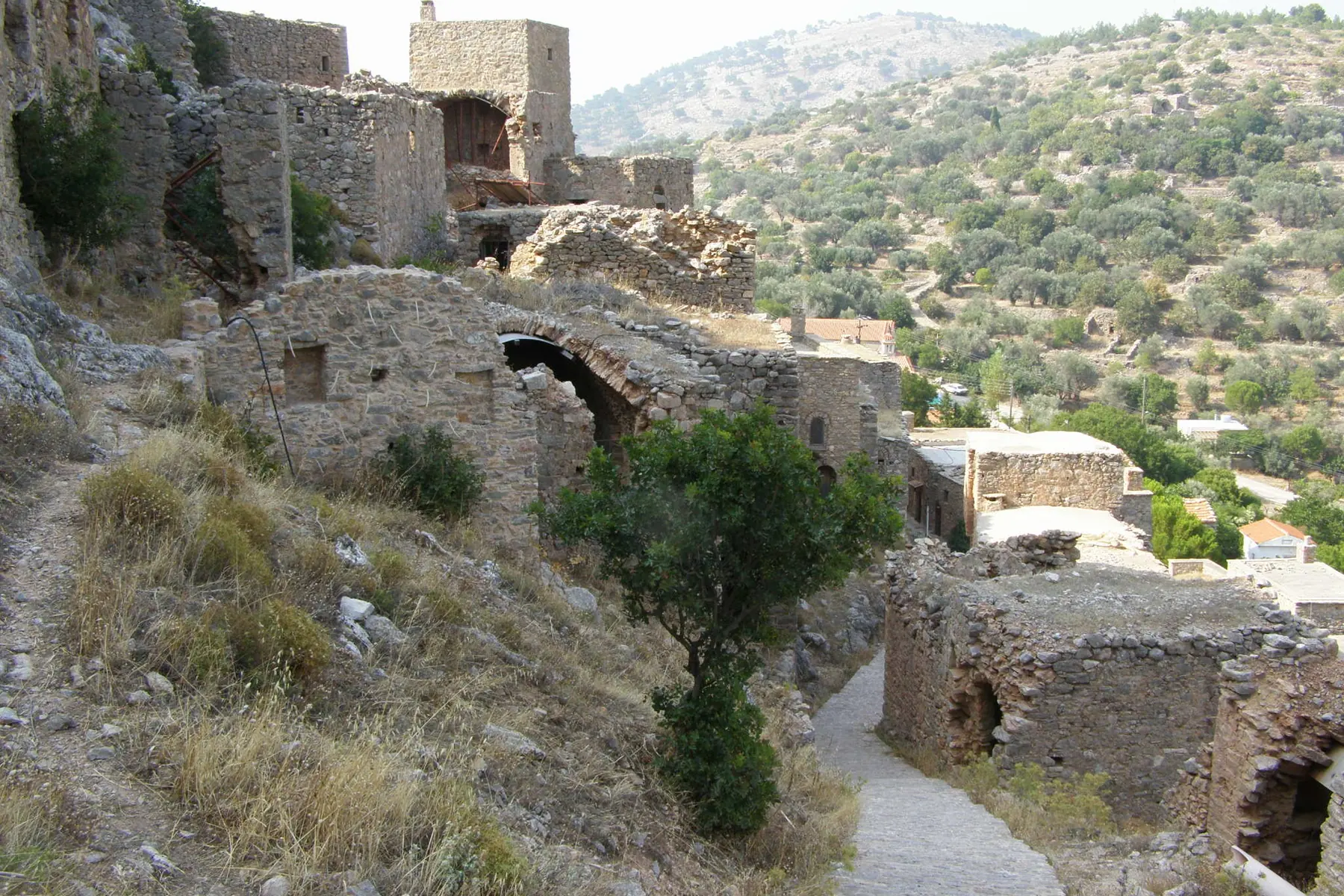
30 miles long and 12 miles wide is a fair size for a Greek Island. Positioned between Samos and Lesvos in the north east Aegean, the island’s scenic contrasts are marked. The north is rocky and barren, almost lunar in appearance, whilst the south is lush and carpeted with citrus groves. Chios is not an island to while away your time on the beach, although there are plenty to choose from. No, Chios is there to be explored and discovered. Amazing, bustling, vibrant Chios Town with its grand church, museums, library, shaded squares, markets, shops and busy harbour.
Medieval Mesta with earth-coloured vaulted narrow streets. Startling Pyrgi where the houses and church are decorated in a strange black and white geometric design. Sleepy and strangely elegant Kardamyla, home to wealthy shipping magnates. The rural outposts of hilltop Volissos and nearby Limnos are a million miles away from hustle & bustle as is the almost landlocked harbour village of Emborios on the south coast.
The one thing Chios has that no other island does is mastic. The resin is tapped from the mastiha trees that grow only in the south of the island, and the villages of that district, the Mastihohoria, were built and fortified around the trade in it. Mesta and Pyrgi are two of them, and their defensive layouts, blind outer walls and interlocking lanes exist because the crop was valuable enough to be worth raiding.
The other thing worth knowing is the scale of the shipping money. Chios produced a disproportionate share of Greece’s shipowning families, and their wealth is visible in Kardamyla and in the mansions and endowments around Chios Town. It is also why the island has a stronger year-round economy than most, and therefore a longer season than its neighbours.