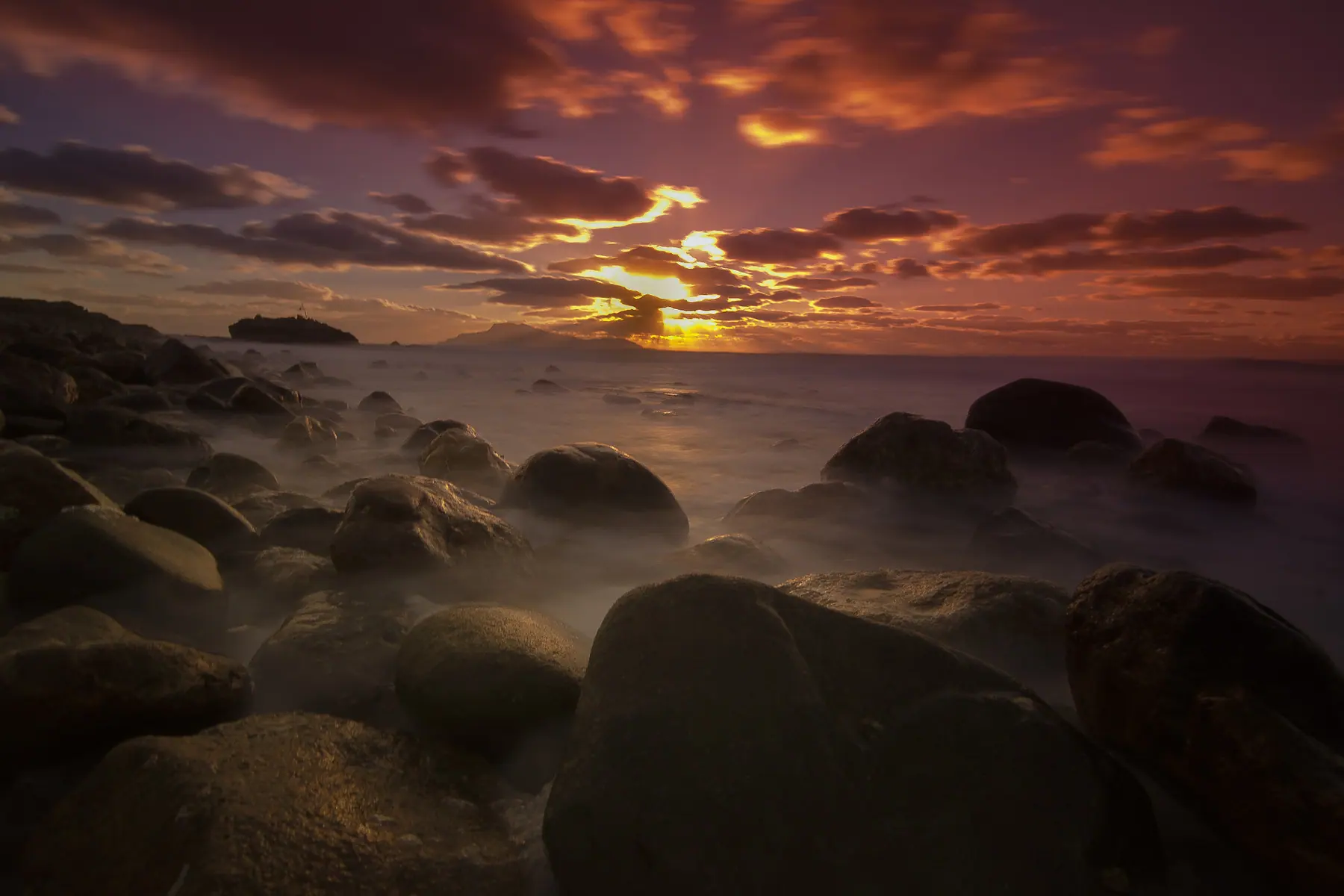
With mountains rising above 1,200 metres, forested areas and excellent beaches, Karpathos has some of the most attractive and dramatic scenery in the Greek islands. Three parts of the island are worth knowing, and they are very different from one another. Karpathos Town, or Pighadia as it is sometimes known, is the main centre of population. Excellent tavernas, cafes and shops, a picturesque waterfront full of character and a long sandy beach are the mainstays of the town’s attractions. Amopi Bay sits close to Karpathos Town.
One of the best beaches on the island and a fair smattering of tavernas and accommodations make Amopi quieter than Karpathos Town. The eastern coastline of Karpathos is blessed with many fine beaches, one of the best being at Kyra Panagia, 150 metres of fine shingle bleeds into a brilliant, turquoise sea. The low-key tourist infrastructure includes a handful of tavernas and mini-market.
Finally, the tiny village of Lefkos and neighbouring Potali Bay, also on the west coast, are what travellers who go looking for off-the-beaten-track corners tend to settle on. Four excellent beaches, half a dozen tavernas and a few shops are the dizzy heights of Lefkos’ & Potali Bay’s tourist development.
There are many charming villages that are worth visiting, thus warranting the hire of a car. Adorning the lee of a ridge 9 km. west of Pighadia lies the vine-covered streets of Menetes. Also worth the detour are the tiny fishing village of Finiki, the stepped alleys of Mesohori and the oasis town of Pyles. Most spectacular though is the northern village of Olymbos which is best reached by excursion boat to Diafani and then local bus. This living museum of music, peasant dress, crafts and dialect is a very strange and fascinating mix of medieval and modern.
| Leg | By | Roughly |
|---|---|---|
| Rhodes → Karpathos | flight | 35 min |
Crossing times are the scheduled durations of the route, not a timetable. Sailings vary by season and operator.