Known as the Jerusalem of the Aegean, Patmos is famous as the island where St. John wrote the Book of Revelation. This most northerly island in the Dodecanese archipelago is an attractive mix of small hills and beaches tucked away within the folds of an unusually long and intricate coastline.
Skala is the island’s port and main town. Stretching round a wide, sheltered bay, exclusive gift shops and boutiques lend the place a smart, up-market feel. Plenty of waterfront tavernas and cafes do a roaring trade, especially when the cruise ships dock. This same waterfront is the beach caiques departure point and every morning between 10.00 and 10.30 the exodus begins to various bays, islands and islets. The fine sands and sweeping dunes of Psili Amos, the multi-coloured pebbles of Lampi and sleepy Marathi islet are all possible destinations. Larger vessels journey across to Lipsi, an island of green hills dotted with blue and white chapels.
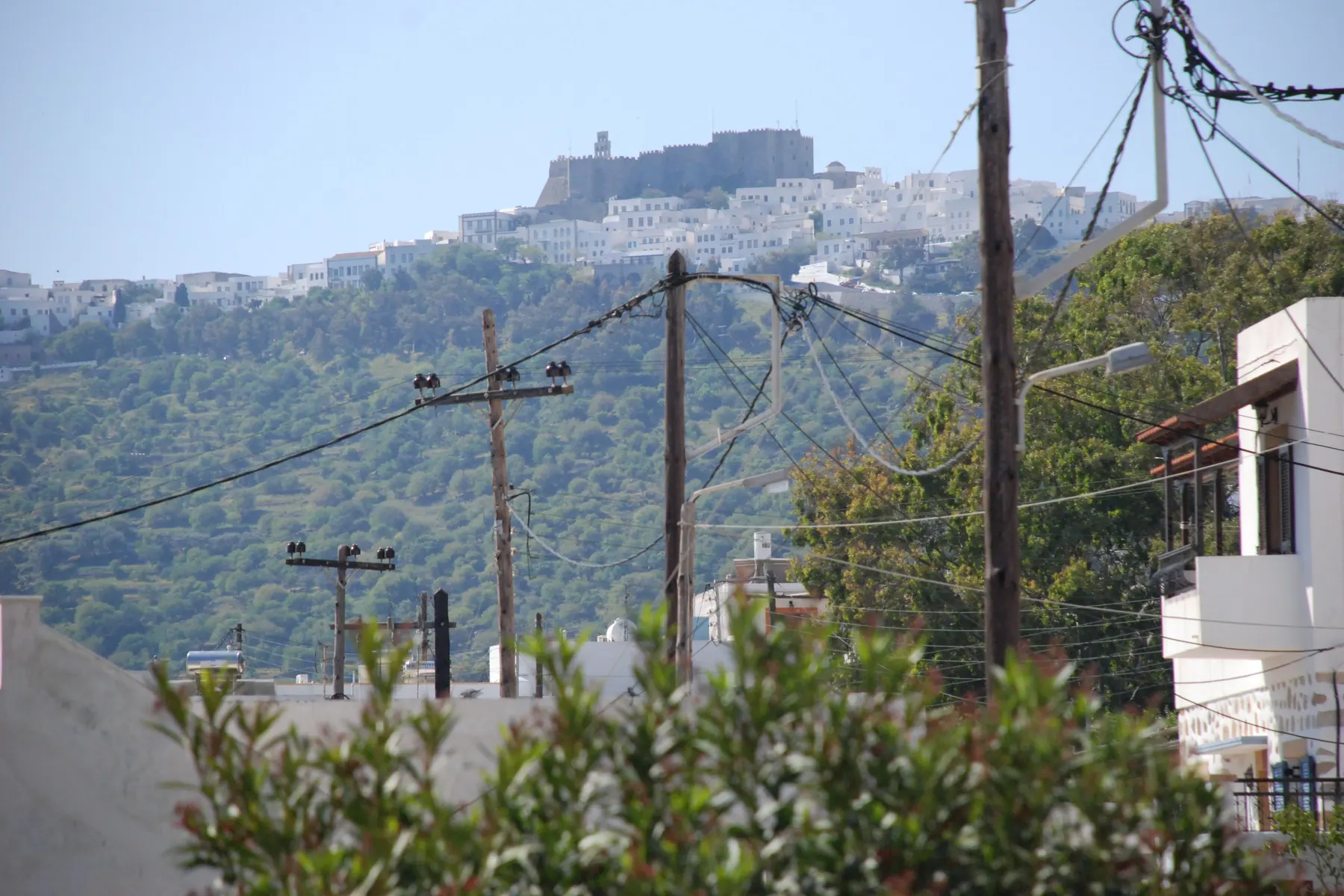
An old, cobbled pathway leads up from Skala to Chora, site of the famous monastery. Along the way, it is possible to visit the Holy Cave of the Apocalypse where it is believed St. John dictated the holy book to his disciple Prochoros after his arrival on the island in AD 95. Once at the top of the pathway, panoramic views down to Skala and across to Samos & Ikaria are reward for ones efforts. The monastery itself was founded in 1088 and is one of the most important places of worship among both Orthodox and Western Christian faithful. Its religious treasures include a 12th century icon of St. John located in the monastery’s main church. Chora itself is a maze of dazzling white, narrow lanes and home to over 40 chapels and sea captains’ mansions.
It is quite feasible to walk the paved coastal road from Skala south to Grikos. Gently undulating and shaded by trees part of the way, this pleasant 55 minutes stroll reveals some of the splendour of Patmos’ coastline. Alternatively, the local bus makes the same journey and continues on up to Hora. Grikos itself possesses one of the best beaches on the island, a handful of tavernas and lovely scenery.
Things to do
Guided tours of the Holy Cave of the Apocalypse and the monastery. Caiques to beaches and day trips to Lipsi & Leros.
Getting there
Travel between Samos or Rhodes and Patmos is by ferry (3 hrs. 40 mins. or 5 hrs. respectively).
| Leg | By | Roughly |
|---|---|---|
| Samos → Patmos | ferry | 3 hrs 40 min |
| Rhodes → Patmos | ferry | 5 hrs |
Crossing times are the scheduled durations of the route, not a timetable. Sailings vary by season and operator.